Reality often feels absolute—solid, measurable, and independent of our interpretations. Yet across multiple scientific disciplines, a different picture is emerging. Instead of a fixed backdrop against which life unfolds, reality appears to be a dynamic process—shaped by biology, perception, culture, and the interpretive frameworks we inherit without even realizing it.
In other words, what we experience as “reality” is not a direct readout of the external world. It is a constructed interpretation—useful, adaptive, and often compelling, but still a filtered rendering shaped by countless influences.
One of the most powerful of those influences is culture.
Western traditions have long imagined reality as concrete, linear, and mechanistic—a universe made of discrete parts governed by predictable laws. Many Eastern philosophies, by contrast, describe reality as cyclical, impermanent, and fundamentally relational. Where the West tends to see a machine, the East often sees a dream. These differences remind us that our current worldview is not the endpoint of understanding, but one lens among many.
How These Primary Worldviews Evolved
The Western worldview grew out of Greek rationalism, Roman law, and later the scientific revolution. Thinkers like Descartes and Newton helped cement the idea of a universe composed of separate objects interacting through fixed laws—an elegant, orderly, clockwork cosmos.
The Eastern worldview emerged from traditions such as Hinduism, Buddhism, Taoism, and Indigenous cosmologies. These perspectives emphasize interdependence, impermanence, and the fluid nature of existence. Reality, in these traditions, is not a static structure but an unfolding process.
Worldviews Over Time
These two dominant worldviews are not the only ones humanity has held. Indigenous cultures across the globe have long embraced relational cosmologies in which humans, animals, land, and spirit form a single, interconnected whole. Medieval Europe saw reality through a theological lens. The Enlightenment reframed it through reason. The Industrial Age through machinery and progress.
Worldviews evolve. They rise, adapt, and sometimes fade. And today, science itself is nudging us toward yet another shift.
What Science Now Tells Us About Reality
For most of human history, our worldviews developed without the benefit of modern instruments. Early astronomers, for example, concluded that the sun revolved around the Earth simply because that’s how it appeared. Only with the invention of the telescope did a deeper truth come into view.
Today, with technologies that peer into the quantum realm, map the brain, and analyze cultural patterns at scale, science is revealing a picture of reality that aligns more closely with relational, dynamic worldviews than with the rigid, mechanistic models of the past.
Reality, it turns out, is not static. It is emergent, fluid, and deeply entangled with our own participation.
Let’s look at what several scientific fields now suggest.
Physical Sciences
Quantum physics has upended classical assumptions. Particles behave as both waves and discrete units. They can remain mysteriously linked across vast distances. And they often do not settle into a definite state until observed. These findings suggest that reality is not a collection of fixed objects but a web of probabilities—relational, indeterminate, and responsive to interaction.
Neurosciences
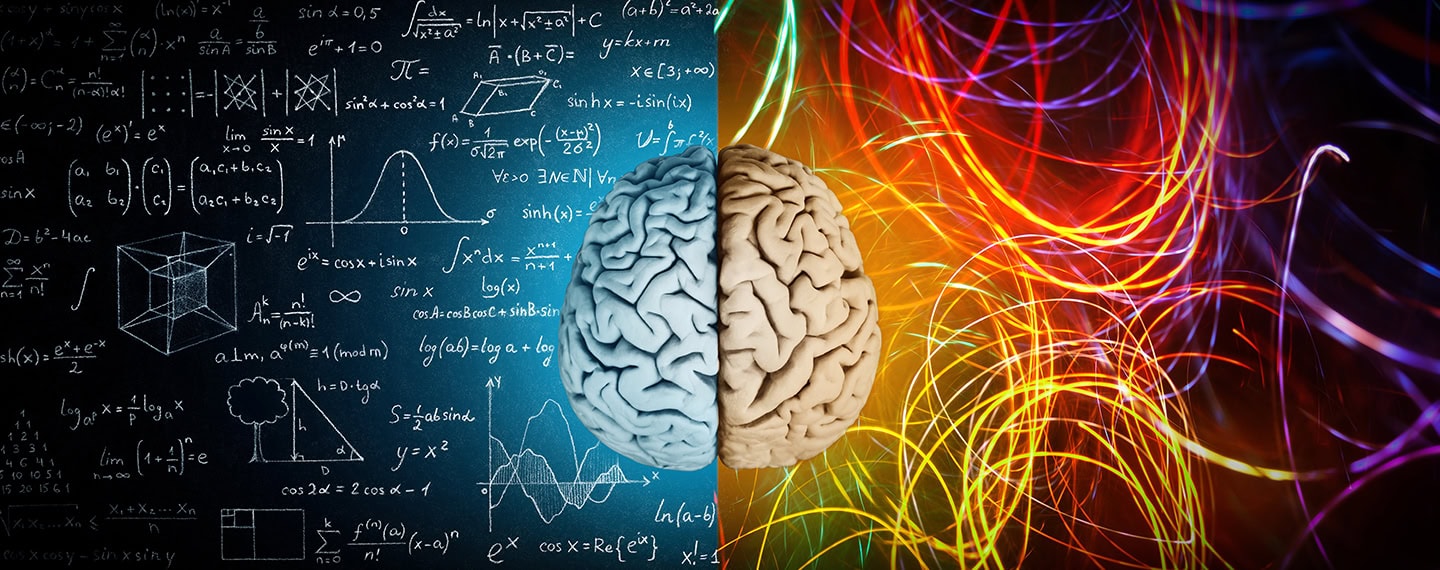
Neuroscience shows that the brain is not a passive receiver of sensory data. It is an active constructor of experience. It filters incoming signals, compares them with past patterns, and generates a coherent story that feels real. Once the brain settles on an interpretation, it even suppresses sensory information that doesn’t fit. What we “see” is therefore not the world itself, but the brain’s best guess at what is useful or meaningful.
Social Sciences
Psychology reveals how cognitive biases, memory distortions, and emotional filters shape our perceptions. Two people can witness the same event and walk away with entirely different realities—each one internally consistent, each one incomplete.
Linguistics shows that language doesn’t just describe reality; it shapes it. Concepts that exist in Mandarin or Sanskrit but have no English equivalent point to different ways of perceiving time, selfhood, and relationship.
Cultural studies demonstrate that rituals, norms, and shared narratives provide the scaffolding through which meaning is constructed. Whether we see time as linear or cyclical, the self as independent or relational, conflict as inevitable or avoidable—these are cultural interpretations, not universal truths.
Reframing Reality for a More Viable Future
Recognizing that reality is a filtered interpretation rather than an objective, unchanging truth opens the door to seeing the world—and each other—with fresh eyes. If our perceptions are shaped by biology, culture, and cognition, then we can begin to ask new questions:
- What if another person’s reality holds truth alongside my own?
- What if spiritual traditions are not competing claims but complementary insights?
- What if conflict is not inevitable, but a failure of imagination and empathy?
- What if understanding how someone’s reality was shaped could enrich our own?
These questions are not abstract. They point toward a more flexible, compassionate way of navigating a world that is increasingly interconnected and rapidly evolving.
The Underpinnings of an Emerging Worldview
Challenging inherited worldviews is not about rejecting the past. It is about loosening our grip on certainty and cultivating a perspective that is more open, curious, and attuned to complexity.
The more we recognize that reality is not fixed or absolute, the more we can build a future grounded in understanding rather than division. Science is not telling us that reality is unreal—it is telling us that reality is participatory. What we experience is a co‑created tapestry, woven from sensory input, interpretation, culture, and consciousness.
So we might ask: If reality is constructed rather than given, how might that change the way we live? How might it reshape our relationships, our institutions, and our sense of purpose? And could this growing understanding be the foundation of a new worldview—one more aligned with the dynamic, interconnected nature of the universe itself?