

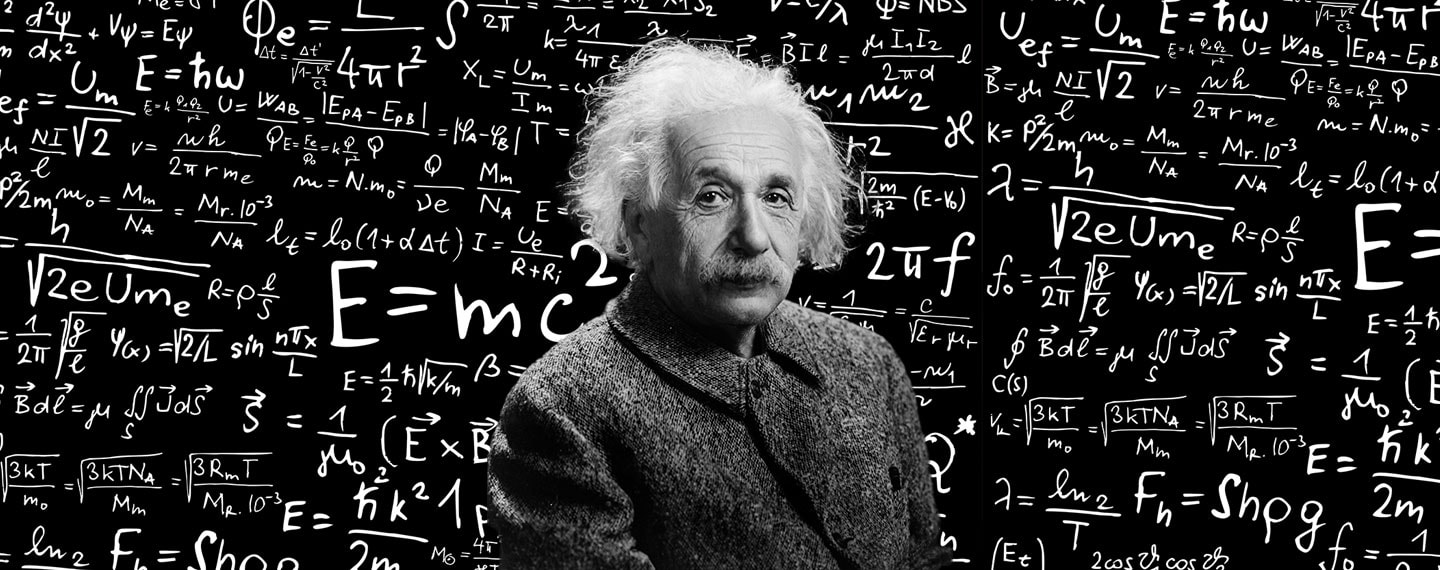
Visionaries who reshape our understanding of the world rarely do so without resistance. Whenever new ideas threaten established beliefs, skepticism rises to meet them. Yet throughout history, certain individuals have pushed forward, not by acceptance, but by clarity of insight and a deep commitment to truth. Albert Einstein stands as one of the clearest examples of this pattern.
A Pioneer Among Many
Einstein didn’t emerge from a vacuum. His breakthroughs unfolded during a period of growing tension in science, when cracks were beginning to appear in the classical worldview. Max Planck was probing the strange behavior of energy. Henri Poincaré was questioning the nature of time. Niels Bohr was exploring the early mysteries of quantum behavior.
All were contributing to a shift that was gaining momentum. Einstein’s work added a crucial layer of coherence, helping to draw these emerging insights into a broader picture of a universe far more dynamic and relational than previously imagined.
Reimagining the Nature of Reality
Einstein’s work reshaped physics at every level. His insights revealed a universe far more fluid and interconnected than the clockwork model that had dominated science for centuries.
- Space and time became flexible. They could stretch, bend, and warp depending on motion and gravity.
- Gravity became geometry. Instead of a force, it was the curvature of spacetime itself.
- Mass and energy became interchangeable. His equation E = mc² showed they were two forms of the same underlying reality.
- The universe became dynamic. His equations predicted expansion, black holes, and gravitational waves—ideas confirmed long after his lifetime.
These weren’t abstract curiosities. Relativity underpins GPS technology. His work helped enable semiconductors, lasers, fiber‑optic communication, and medical imaging. Much of modern life rests quietly on the scaffolding of Einstein’s imagination.
The Resistance He Faced
Despite the elegance of his ideas, Einstein encountered resistance on multiple fronts. His work didn’t glide into acceptance—it collided with the assumptions of his era.
Scientific Resistance
Many physicists were deeply invested in the Newtonian worldview. Einstein’s claims—that time could stretch, that space could curve, that light behaved in ways classical physics couldn’t explain—felt destabilizing. Some dismissed his early papers as speculative or physically impossible.
Philosophical Resistance
Einstein wasn’t just challenging equations; he was challenging the intellectual comfort of an entire era. A universe without fixed absolutes was unsettling. For some, it threatened the very idea of an orderly, comprehensible cosmos.
Institutional Resistance
Einstein did not come from elite academic circles. As a young patent clerk, he worked outside traditional pathways of scientific authority. His unconventional background made it easier for gatekeepers to overlook or minimize his work.
Political and Cultural Resistance
As his fame grew, so did opposition from nationalist and antisemitic groups in Europe. In the 1920s, organized campaigns attempted to discredit relativity as “un‑German” or “Jewish science.” These attacks had little to do with physics and everything to do with fear—fear of change, fear of complexity, fear of the unfamiliar.
How Einstein Moved Through Resistance
Einstein didn’t overcome resistance by force or persuasion. He overcame it through clarity, patience, and evidence.
- He trusted the science. When the 1919 solar eclipse confirmed his prediction that starlight would bend around the sun, the scientific world could no longer ignore the power of his ideas.
- He stayed grounded in curiosity. Rather than retreat in frustration, he continued refining his theories and engaging with critics.
- He collaborated widely. Einstein built bridges with mathematicians, astronomers, and experimental physicists, helping translate abstract ideas into measurable reality.
- He held fast to his vision. Even when quantum mechanics took a direction he disliked, he continued probing and questioning—not for approval, but for understanding.
His persistence wasn’t loud or combative. It was steady, principled, and rooted in a deep belief that reality is worth understanding, even when the path is difficult.
A Humility Rooted in Interdependence
For all his brilliance, Einstein carried a striking humility — not the performative kind, but a grounded recognition that no life, and certainly no insight, stands alone. He often reminded himself that everything he accomplished rested on the work of countless others. As he wrote, “my inner and outer life are based on the labors of other men, living and dead.”
This wasn’t modesty for its own sake. It was a worldview. Einstein saw himself as part of a vast lineage of inquiry, each generation building on the last. His breakthroughs were not acts of solitary genius but contributions to an ongoing human conversation about the nature of reality.
A Sense of Sacred Responsibility
Einstein believed that this interdependence carried a moral obligation. “Only a life lived for others is a life worthwhile,” he said — a simple sentence that reveals a profound ethic. For him, the pursuit of truth was inseparable from the duty to serve, to give back in proportion to what one has received.
This sense of responsibility extended beyond individuals to humanity as a whole. He warned that the greatest danger was not the existence of harmful forces but the passivity of those who “look on and do nothing.” In his view, each person had a role to play in shaping a more compassionate and conscious world.
Humility as a Doorway to Wonder
Einstein’s humility also opened him to wonder. He saw mystery not as a gap in knowledge but as the wellspring of all genuine discovery. “The most beautiful thing we can experience is the mysterious,” he wrote — a reminder that awe is not an escape from reality but a deeper encounter with it.
In this way, Einstein embodied the very shift your series is tracing: a movement from a worldview of separateness and certainty toward one rooted in relationship, responsibility, and reverence for the unknown.
A Legacy That Continues to Unfold
Einstein’s breakthroughs helped advance the emergence of a new worldview—one that sees reality as dynamic, relational, and far more mysterious than classical physics ever allowed. His work didn’t end the old paradigm on its own, nor did it define the new one completely. But it opened doors that others have continued to walk through, shaping fields from cosmology to quantum theory to philosophy of science.
His story is a reminder that resistance is not a sign of failure. It is often the companion of insight. And persistence, when guided by clarity and curiosity, can help reshape the world.