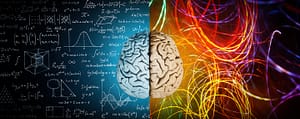


Reality is a Work in Progress
Recent discoveries suggest that reality is not a passive reflection of the external world. Instead, it’s a continual work in progress—shaped and reshaped by biological, cognitive, and cultural forces, as well as by the decisions we make, often unconsciously, through our biases and inherited frames of reference.
In short, what we perceive as reality is a filtered interpretation—possibly even an illusion—constructed by the mind and molded by countless influences.
Importantly, the Western view of reality as concrete, time-bound, and mechanistic is not universal. Many cultures, both ancient and contemporary, have held radically different conceptions. Eastern philosophies, for instance, often describe reality as cyclical, impermanent, and illusory—more like a dream than a machine. Indigenous traditions across the globe speak of reality as relational and animate, where land, spirit, and story are inseparable. Even early Christian sects entertained ideas of reincarnation and spiritual evolution, suggesting a more fluid and layered view of existence.
These perspectives aren’t just historical curiosities. They remind us that our current worldview is not the endpoint of understanding, but one lens among many.
Given the dynamic, ever-shifting view of reality that science now portrays, it seems we participate in creating reality through how we perceive, interpret, and interact with the energies around us. According to the emerging view, reality is not fixed, absolute, or concrete. It is fluid, emergent, and deeply entangled with our own consciousness.
Let’s look, for instance, at what a handful of natural sciences have to say about this evolving picture—each from within its own domain of expertise.
- Quantum Physics offers multiple radical departures from classical thinking. It’s provided incontrovertible evidence, for example, that particles behave as both waves and discrete units (wave-particle duality), can remain mysteriously linked across space (entanglement), and may not settle into a definite state until observed (the observer effect). These findings suggest that reality is not fixed or independent—it’s relational, probabilistic, ever-changing, and deeply entwined with perception.
- Sensory Science reveals that our senses filter stimuli it passes through to the brain, and in the process, often distorts “objective” reality in ways that correspond with the physical limitations of our sensory apparatus.
- Neurosciences demonstrate that our brains are active partners with our senses. It receives input from our senses, filters it further, and organizes it in ways that satisfy its drive to create meaning. Once satisfied, our brains provide feedback to our senses, which essentially tells our senses to ignore environmental cues that don’t fit the pattern of meaning it has determined.
Social sciences echo the same themes. For instance:
- Psychology demonstrates that cognitive biases and memory distortions affect our perceptions of reality and contributes to us holding on to beliefs that seem undeniably real to us, while not at all real to others.
- Linguistics also offers clues as to how our thoughts, conceptual frameworks and perceptions color our views of reality. Consider, for instance, how languages such as Mandarin Chinese and Sanskrit (from India) contain words, sounds, and phrases that resist direct translation into English. These aren’t just linguistic quirks; they reflect fundamentally different ways of perceiving and relating to the world.
- Cultural Studies show that meaning is shaped by rituals, and social norms. From the Western emphasis on individualism and the linear progression of time to Indigenous traditions that prioritize relationality and cyclical time, culture provides the scaffolding through which reality is understood.
A Deep Dive Into Natural Science Views About Reality
Let’s dive a little deeper into what each of these disciplines has to say about this evolving picture of reality, each from within its own domain of expertise.
The Role of Sensory Perception in Constructing Reality
It’s tempting to believe that our senses offer a direct window into the world. But in truth, they act more like filters than open portals—selecting, limiting, and shaping what enters our awareness. What we perceive is not the full scope of reality, but a curated slice—bounded by the physical capacities of our sensory organs and shaped by the conditions in which they evolved.
We can’t see ultraviolet light, hear ultrasonic frequencies, or feel the presence of microscopic organisms. Our sensory apparatus is tuned to a narrow range of stimuli—just enough to help us survive, but far from comprehensive. And even within that range, the senses don’t passively receive information. They screen it, emphasizing some signals while ignoring others.
Of course, the senses don’t operate in isolation. By themselves, they serve no purpose. They work in concert with the brain, which interprets and integrates their input. But before the brain ever gets involved, the senses have already made decisions—about what’s worth noticing, what can be ignored, and what never even registers.
Consider how this selective process unfolds across the senses:
- Vision: Human eyes detect only a sliver of the electromagnetic spectrum—visible light. We’re blind to ultraviolet, infrared, and countless other wavelengths. Even within our visual range, the eyes don’t capture a complete image. They scan, sample, and send fragments. What we “see” begins with what the eyes allow
- Hearing: Our ears are tuned to a limited frequency band, missing both the low rumbles and high-pitched sounds that other species detect. What we do hear depends on attention, environment, and even mood. The ears don’t record sound—they filter it, passing along only what seems relevant.
- Touch: Sensory receptors in the skin respond to pressure, temperature, and vibration—but only within certain thresholds. Much of what touches us goes unnoticed. And expectation plays a role: in blindfolded experiments, people report sensations based on what they believe they’re touching, not just what’s physically present.
- Taste and Smell: These senses are deeply intertwined and highly suggestible. What we call “flavor” is a fusion of taste, smell, sight, and texture. Change the color of a drink, and people report different flavors—even when the ingredients are identical. Without smell, taste becomes muted. These senses don’t just detect chemicals—they construct experience from fragments.
Our senses aren’t deceiving us—they’re doing their best to help us navigate a complex world. But they deliver a version of reality shaped by physical limits and priorities set by a myriad of influences.
What we receive is not reality itself, but a filtered rendering—adapted to our species, our context, and our expectations. Each person receives a slightly different version, shaped by their perceptual abilities and by what they choose—or are conditioned—to pay attention to.
Neuroscience: How the Brain Edits Reality
Neuroscience—the study of the brain and nervous system—reveals that perception isn’t just about receiving sensory data. Our brains don’t passively absorb the world; they actively shape it.
Instead of simply recording what the senses deliver, the brain filters, interprets, and even predicts what we perceive. It decides what gets noticed, what gets ignored, and how it all gets stitched together into a coherent experience.
In this way, what we call “reality” is less a direct reflection of the external world and more a version assembled by the brain—tailored to our biology, shaped by our past, and influenced by our expectations.
Here are a few ways this plays out in everyday life:
- Pattern Recognition: The brain is wired to detect patterns, even where none exist. This explains optical illusions, the perception of faces in inanimate objects, and our ability to anticipate movement before it happens.
- Sensory Bias: Interpretation is shaped by prior experience, expectation, and context. Identical stimuli can be perceived differently by different people—or even by ourselves, depending on the situation.
- Neuroplasticity: The brain is not static. It continuously reshapes itself in response to learning, environment, and perspective—meaning our experience of reality evolves as we do.
The findings of neuroscience amplify a profound truth: the brain doesn’t merely receive reality—it orchestrates it. And because each person’s sensory apparatus filters the world differently, and each brain reshuffles that input in its own way, the reality constructed within one mind may differ significantly from the reality constructed within another. What we experience as “the world” is, in many ways, a personalized rendering—crafted moment by moment by the neural symphony within.
Quantum Physics and the Fluid Nature of Reality
Quantum physics introduces a range of mind-bending discoveries that challenge traditional ideas about reality. Each year, new findings emerge from laboratories around the world, raising the possibility that we are on the cusp of a radically different worldview—one that sees reality not as fixed and objective, but as participatory and dynamic. Consider, for instance:
- The Observer Effect: Experiments suggest that particles behave differently when observed, meaning consciousness itself may play a role in shaping reality.
- Wave-Particle Duality: Electrons and photons can behave as both waves and particles—depending on how we measure them. This reinforces the idea that existence is not fixed but depends on interaction.
- Quantum Entanglement: Two particles can remain connected across vast distances, suggesting that reality may be fundamentally non-local rather than independent and separate.
Rather than an unchanging external world, quantum physics paints a picture of reality as fluid—shaped by observation, relationship, and context.
The practical implications of these discoveries are likely to be far-reaching. Already, today, we can see how quantum principles are influencing fields like computing, encryption, and medicine. Quantum computers, for example, harness superposition and entanglement to perform calculations that would be impossible for classical machines—hinting at a future where information itself behaves in radically different ways.
Consider also how these discoveries might reshape our conception of spirituality. In many Eastern traditions—particularly within Hinduism and Buddhism—reality is seen not as fixed and separate, but as interdependent, impermanent, and shaped by consciousness. The idea that observation influences outcomes, or that particles remain mysteriously connected across space, echoes ancient teachings about the unity of all things and the illusory nature of separation.
As quantum physics continues to challenge materialist assumptions, it may tip the scales toward a more integrative worldview, one that honors both empirical inquiry and contemplative insight. Rather than opposing forces, science and spirituality may be converging toward a shared recognition that reality is participatory, relational, and far more mysterious than we once believed.
What the Social Sciences are Saying About Reality
Psychology suggests that our memories and biases reshape reality, often without our awareness—pointing again to the idea that perception doesn’t reveal reality as it truly is. Here’s a glimpse into how psychologists explore this terrain:
Psychology: The Distorted Lens of Memory and Belief
Psychology suggests that our memories and biases reshape reality, often without our awareness—pointing again to the idea that perception doesn’t reveal reality as it truly is. Here’s a glimpse into how psychologists explore this terrain:
- Cognitive Biases: Our minds filter information through pre-existing beliefs, reinforcing what we already think is true while ignoring contradictory evidence.
- Memory Distortion: Human memory is not a perfect record. Each time we recall something, we rebuild it—making it vulnerable to change.
- Social Conditioning: Collective beliefs shape perception. People often see what they expect to see, believe what they’ve been told, and reject what challenges their worldview.
- Optical Illusions Even simple visual tricks—like images that appear to move or shapes that seem to change size—reveal how easily our perception can be fooled. What we “see” isn’t always what’s there.
Similar to what we’re learning from the natural sciences, findings in the area of psychology suggest that reality, as we experience it, is not fixed or purely external. It’s filtered through belief, memory, and social influence. Recognizing this can soften our certainty, invite humility, and open space for deeper listening.
In terms of our day-to-day behaviors, if our view of reality is shaped more by interpretation than by objective truth, then living wisely may mean questioning our assumptions, staying curious, and allowing room for perspectives beyond our own.
Linguistics: The Language of Reality
Psychology shows that our minds reshape reality through memory, belief, and bias. Linguistics adds another layer: the language we speak influences how we perceive and construct the world. Words don’t just reflect reality—they help form it. The categories, metaphors, and grammatical structures we inherit shape what we notice, how we relate, and what we believe to be true.
- Sanskrit and Pali: These languages emphasize process and fluidity over fixed objects, reinforcing a more dynamic, unfolding view of reality.
- Chinese: Rooted in relational meaning, Chinese reflects Daoist philosophy, highlighting interconnectedness rather than isolated truths.
- English and Latin-Based Languages: These tend to categorize and define, encouraging structured, analytical thinking—yet sometimes limiting more fluid or relational perspectives.
Taken together, these linguistic patterns suggest that reality is not merely observed—it’s shaped by the language we use to engage with it. This insight invites us to listen more deeply, speak more intentionally, and remain open to the possibility that other ways of speaking may reveal dimensions of reality our own language cannot easily express. In a world of competing truths, cultivating linguistic humility may be one of the most powerful ways to expand our understanding.
Cultural Studies: Reality as a Shared Inheritance `
Building on psychology’s insights into individual perception and linguistics’ role in shaping thought, cultural studies reveal how entire societies construct reality through shared beliefs, rituals, and inherited frameworks. Culture doesn’t just color our experience—it defines the boundaries of what we consider real, possible, or worth pursuing.
- Eastern Philosophies (India, China, Japan): Reality is fluid and cyclical, emphasizing balance, transformation, and the impermanence of fixed absolutes.
- Western Thought (Europe, North America): Reality is often framed in linear terms, reinforcing ideas of progress, hierarchy, and categorization.
- Indigenous Traditions: Reality is relational—woven through kinship with land, ancestors, and unseen forces, rather than divided into separate domains.
These cultural lenses shape not only how we interpret the world but how we act within it. Recognizing that reality is culturally constructed invites us to question inherited assumptions, honor diverse worldviews, and approach others with deeper empathy. In a time of global interconnection and cultural tension, this awareness can help us move beyond rigid narratives and toward more inclusive, relational ways of being.
Reframing Reality for a More Viable Future
When we recognize that reality is a filtered interpretation rather than an objective truth, it opens the door to seeing the world—and each other—with fresh eyes. Recognizing that our perceptions are shaped by sensory input, cognitive biases, societal constructs, and cultural influences allows us to step back and ask: What if reality isn’t exactly as we assumed? And what if shifting our understanding could help guide us toward a more viable, compassionate future?
Consider, for example:
- Instead of believing that my perspective is the only correct one, what if I considered that another person’s reality might hold truth as well?
- Instead of assuming that my religion is the only right path, what if I opened myself to the wisdom embedded in other traditions—seeing spiritual truths as interconnected rather than exclusive?
- Instead of thinking that war is the only way to resolve conflict, what if we prioritized deeper understanding—through diplomacy, cultural exchanges, and a willingness to see beyond our own frameworks?
- Instead of dismissing those who think differently than I do, what if I asked, What shaped their reality? and how might their experiences enrich my own?
Challenging inherited worldviews isn’t about abandoning what we believe. It’s about loosening our grip on certainty, questioning rigid assumptions, and cultivating a perspective that is more open, curious, and attuned to reality’s complexity.
The more we wake up from the illusion that reality is fixed, absolute, and unaffected by our perceptions, the closer we come to building a future shaped by understanding, unity, and shared insight.
Reality, as explored through the lens of quantum physics, neuroscience, psychology, language, and culture, is not fixed. It is fluid, participatory, and deeply personal. What we experience is not external truth, but a co-created tapestry—an ever-shifting interplay between what we observe and how we interpret it, through the prism of personal biases, cognitive capacities, cultural conditioning, and inherited frameworks.
So let’s ask ourselves: If we truly grasped this—if we understood that reality is shaped rather than given—could it change how we live, how we relate, and how we evolve? Could it help us unfold into a future not just more viable, but more humane?
Books:
- The Case Against Reality by Donald Hoffman – Argues that perception does not reflect objective reality.
- Anil Seth: Being You – Explores how consciousness constructs reality.
- The Brain: The Story of You by David Eagleman – Examines how the brain creates subjective experience.
- Life, Death, and Other Inconvenient Truths by Shimon Edelman – Discusses how perception is a virtual construct.
Websites & Articles:
- Reality Is in the Eye of the Beholder – Explores how perception shapes reality.
- Does Reality Exist or Is Our Perception Just an Illusion? – Examines the neuroscience behind perception.
- Einstein on Reality as an Illusion – Philosophical reflections on the nature of reality.